Microsoft's Agentic Modernization Stack: Azure Copilot, GitHub Copilot, and the Control Plane Nobody Is Talking About

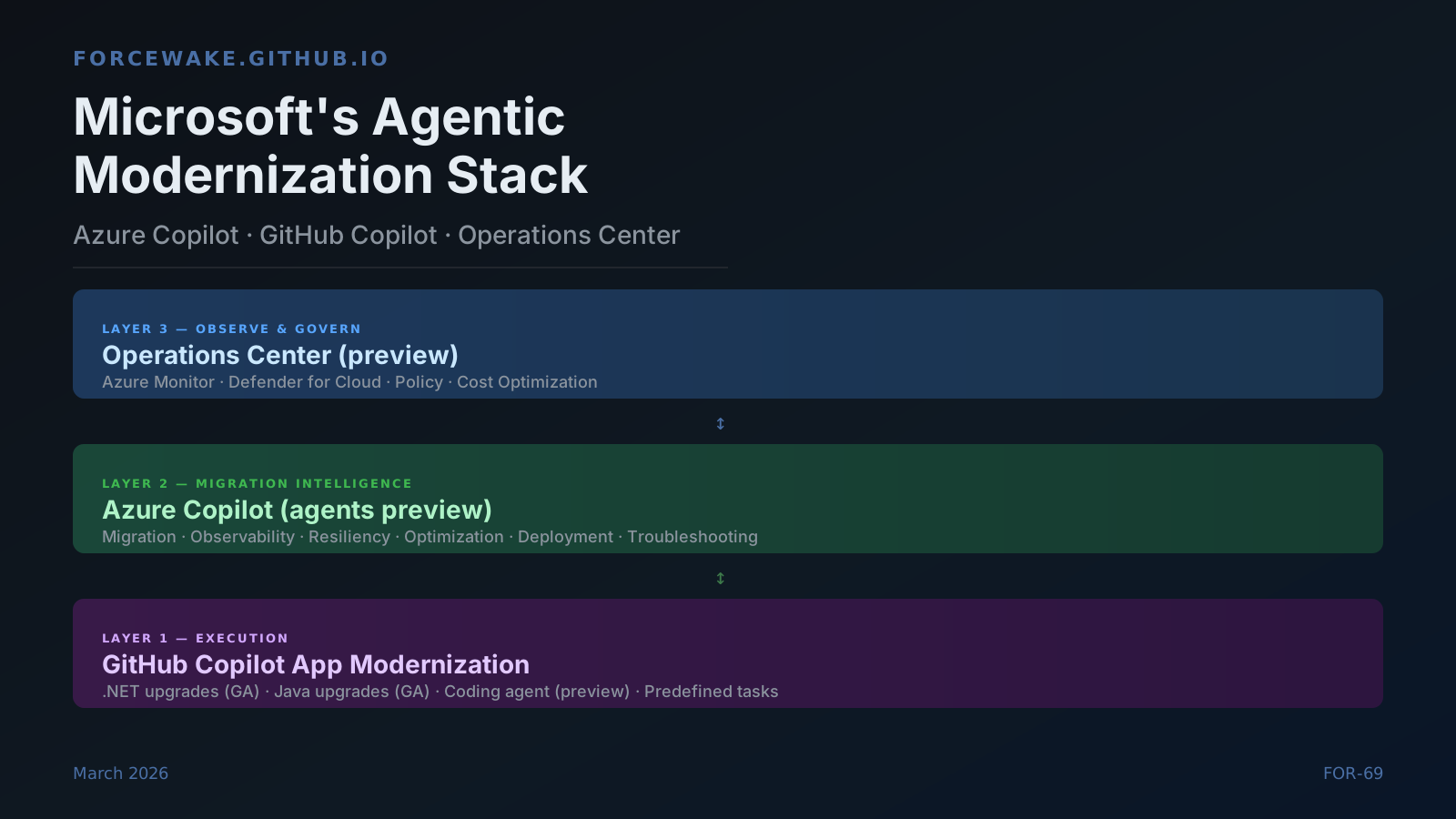
Microsoft’s biggest AI play in 2026 is not a new model, a new IDE, or a new assistant. It is an emerging connected modernization control plane: Azure Copilot owns migration and operational intelligence, GitHub Copilot owns application transformation execution, and Operations Center gives enterprises a single surface to observe, steer, and govern the resulting cloud estate. Each layer is individually useful. Together they describe something more interesting: a vertical stack that can convert a multi-year legacy migration programme into a continuous, agentic workflow — with humans kept in the decision seat rather than removed from it. ...
March 24, 2026 · 15 min · 3106 words · Pavel Nasovich

FinOps Toolkit Framework Playbook: Secure Hubs, AI Agents, and a 90-Day Execution Model

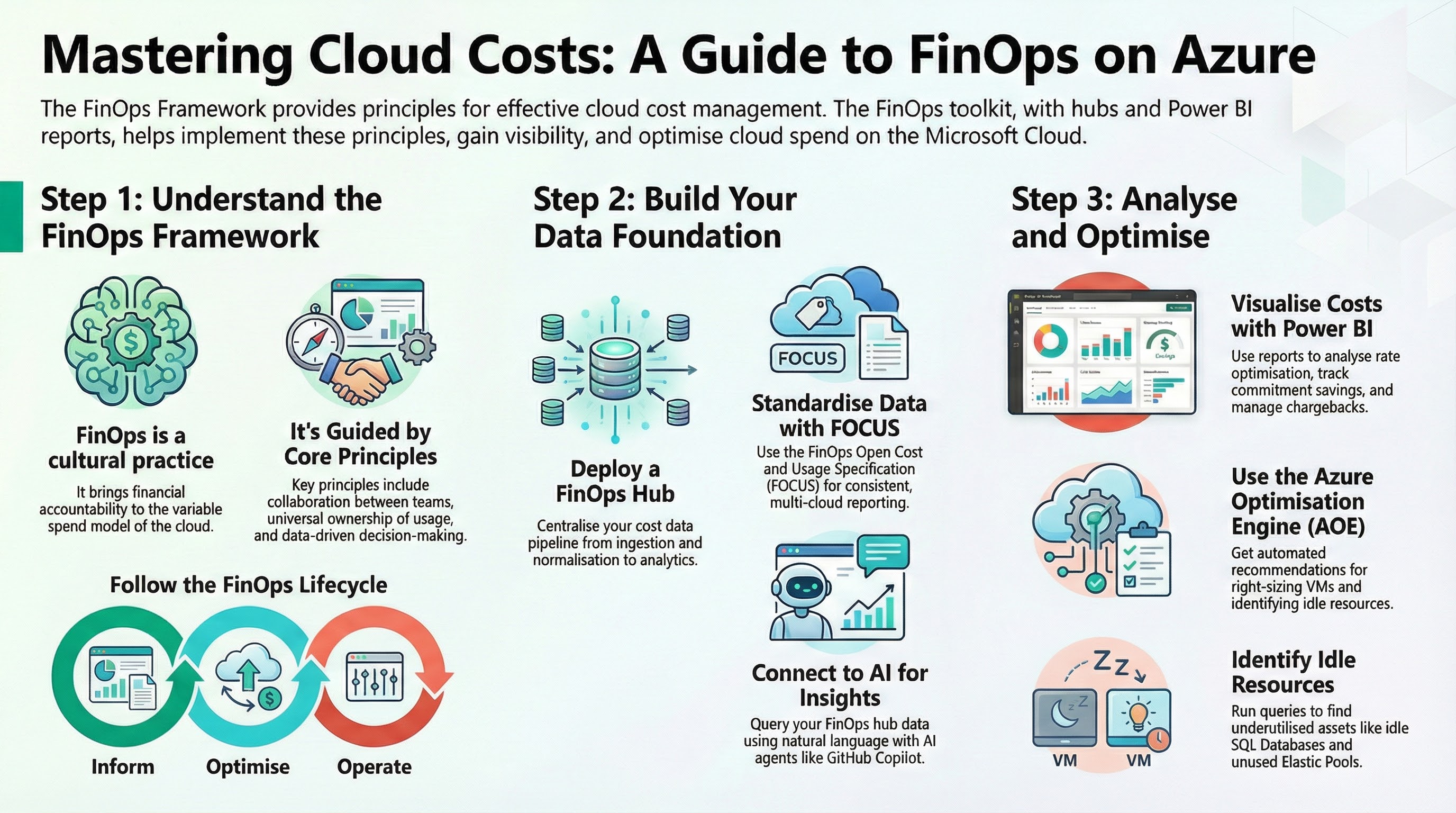
Preface: Why This Version Exists Most FinOps programs fail in the same place: they build good dashboards and still ship bad decisions. The root cause is rarely tooling. It is usually one of these: Ingestion is not trustworthy (missing prices, missing months, duplicates after scope changes). Ownership is fuzzy (nobody is on the hook for a recommendation becoming a change). The loop is discontinuous (big cost projects twice a year instead of an operating rhythm). This playbook focuses on the parts that create trust: data contracts, scope design, versioning, and operational gates. ...

March 2, 2026 · 13 min · 2693 words · Pavel Nasovich

Microsoft Agent Framework in 2026: Enterprise Architecture Playbook

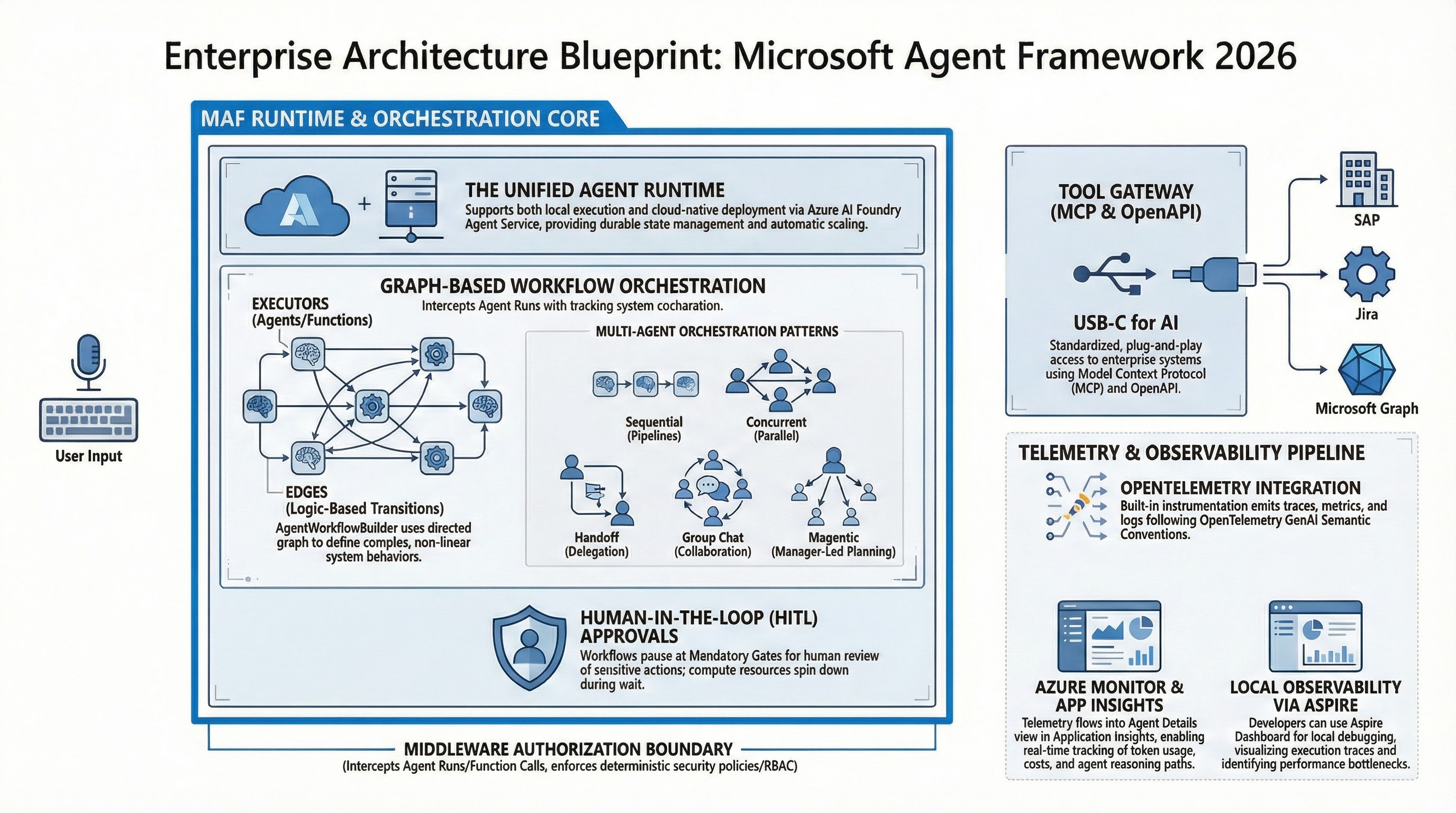
Reading time: ~45 min | Audience: platform leads, principal engineers, AI architects, security teams | Primary goal: build agent systems that stay stable under real enterprise pressure Preface: Why I Wrote This Version Quick context on why this exists. I have read too many agent posts that sound convincing and then collapse in real enterprise environments. Usually they miss one of three things: They stop at demos. They show code without operations. They draw architecture without incident behavior. This version is for teams that already shipped something and now need clear answers in design review, security review, and on-call: ...

February 23, 2026 · 15 min · 3074 words · Pavel Nasovich

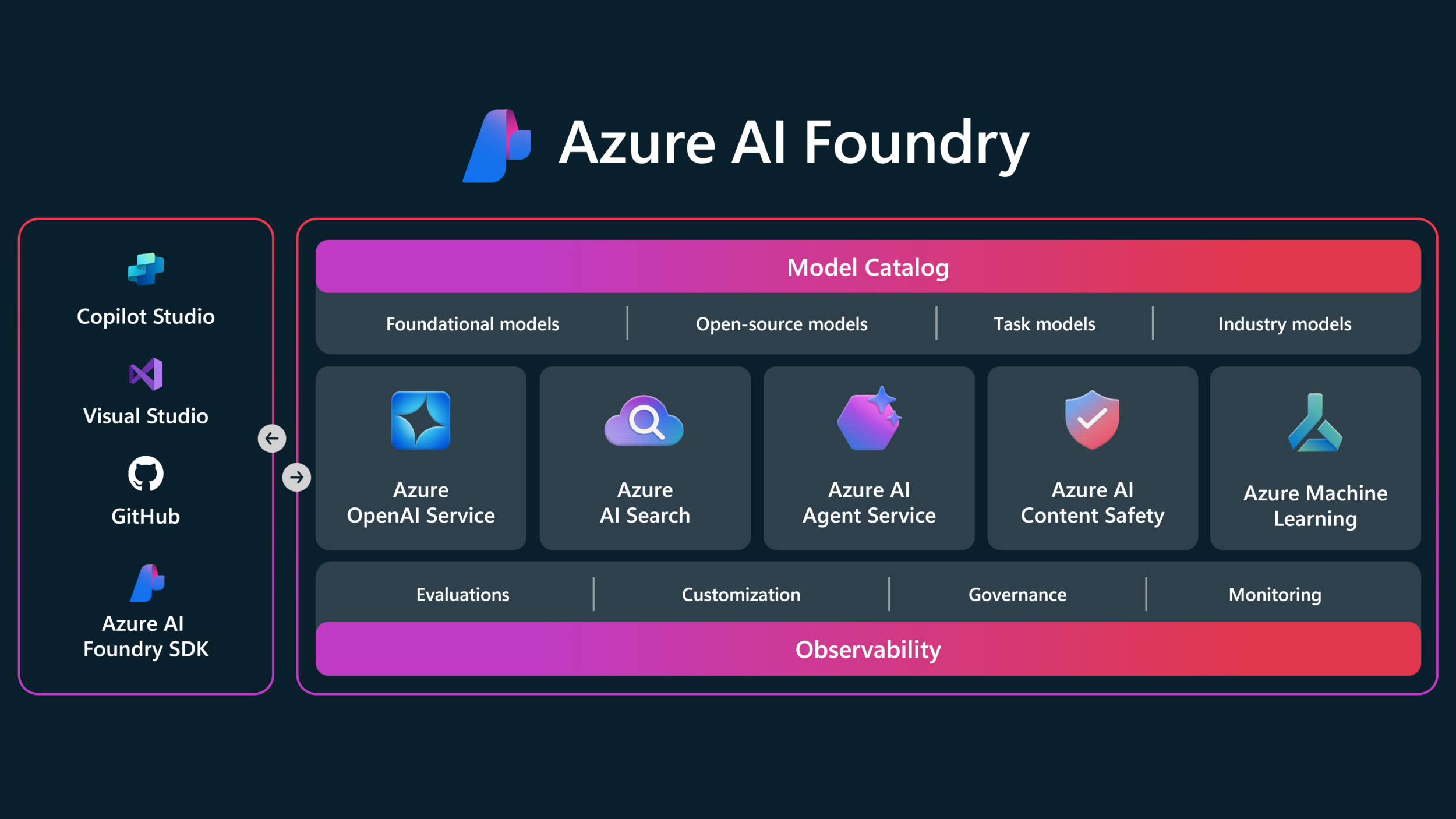
Azure AI Foundry: Building Multi-Agent Systems Without Losing Your Mind (Much)

Hey folks! So, picture this: it’s 3 AM, I’m staring at my fourth attempt to orchestrate multiple AI agents, and my code looks like someone tried to solve the traveling salesman problem with spaghetti. The agents are talking to each other… sometimes. When they feel like it. When Mercury is in retrograde. And then Microsoft drops Azure AI Foundry and promises it’ll solve all my multi-agent orchestration problems. The Problem With Building AI Agents (Or: Why I Started Drinking More Coffee) Let me paint you a picture. You want to build an AI system that actually does something useful. Not just a chatbot that tells you the weather - we’ve all built that demo. I’m talking about real work. Multiple agents, each doing their specialized thing, talking to each other, handling errors, not hallucinating too much. ...

August 27, 2025 · 7 min · 1365 words · Pavel Nasovich

Mastering Enterprise AI: A Deep Dive into Azure AI Gateway

Generative AI is revolutionizing business, offering incredible potential. Yet, for many enterprises, adopting powerful models like those in Azure OpenAI feels like navigating the Wild West. How do you unleash innovation without facing runaway costs, complex security threats, inconsistent usage, and the immense challenge of governing AI responsibly at scale? The answer lies in establishing robust, centralized control. Enter the Azure AI Gateway. It’s absolutely critical to understand this: Azure AI Gateway is not a standalone product. Instead, it refers to a powerful set of capabilities integrated directly into Azure API Management (APIM). Microsoft leverages the mature, battle-tested foundation of APIM to provide a centralized control plane, purpose-built for the unique demands of managing Generative AI workloads within the enterprise. Forget deploying separate gateway software; Azure builds this intelligence into the platform you may already use for API management. ...

April 4, 2025 · 11 min · 2265 words · Pavel Nasovich

Azure Resource Inventory (ARI): Your Comprehensive Guide to Efficient Cloud Management

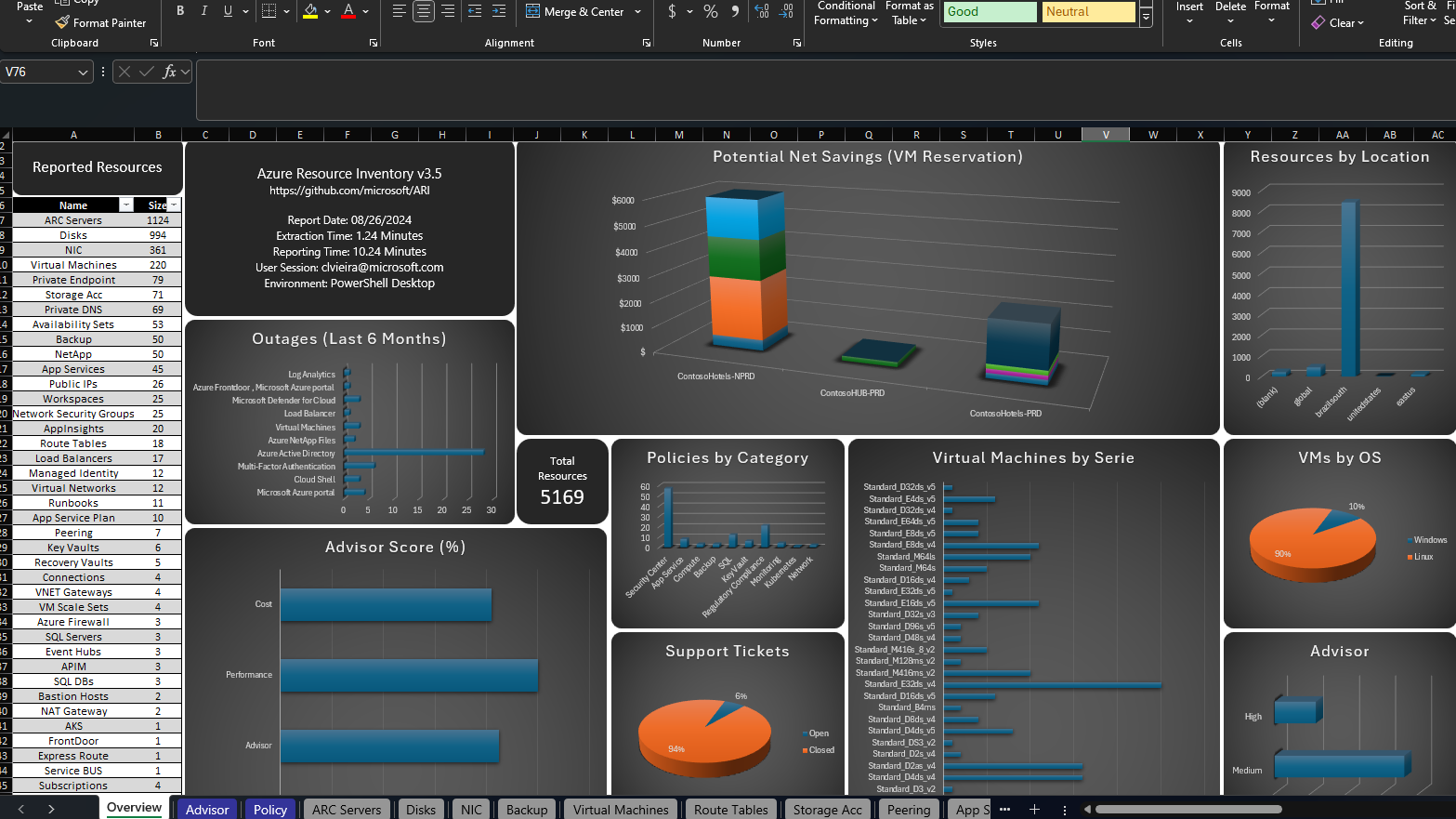
Introduction: Why Azure Resource Inventory Matters With Azure’s vast ecosystem of virtual machines, storage accounts, databases, networks, and countless other services, keeping track of all deployed resources can be challenging. Azure Resource Inventory (ARI) addresses this problem head-on, collecting details from multiple subscriptions and generating an Excel workbook that breaks down each resource type - complete with security recommendations, cost insights, and more. This single consolidated report is a game-changer for cloud administrators, helping them govern infrastructure, optimize costs, and streamline audits. ...

February 26, 2025 · 7 min · 1339 words · Pavel Nasovich

Today I Learned: Azure Cosmos Db: Query for Fields not defined

There are several ways: Using LINQ For anyone who wants a Linq solution, it’s: query.Where(d => !d.SomeField.IsDefined()) Note: To get the IsDefined extension method, you need to add Microsoft.Azure.Documents.SystemFunctions namespace Using SQL Query Grammar with built-in functions IS_DEFINED (expr) - returns a Boolean indicating if the property has been assigned a value. SELECT TOP {0} * FROM Telemetry t WHERE (is_defined(t.longitude) OR is_defined(t.latitude)) Thanks to Azure Feedback and Azure Cosmos DB SQL syntax reference

December 27, 2017 · 1 min · 74 words · Pavel Nasovich