When the Scanner Turned: Inside the Trivy Supply Chain Attack and the Rise of CanisterWorm
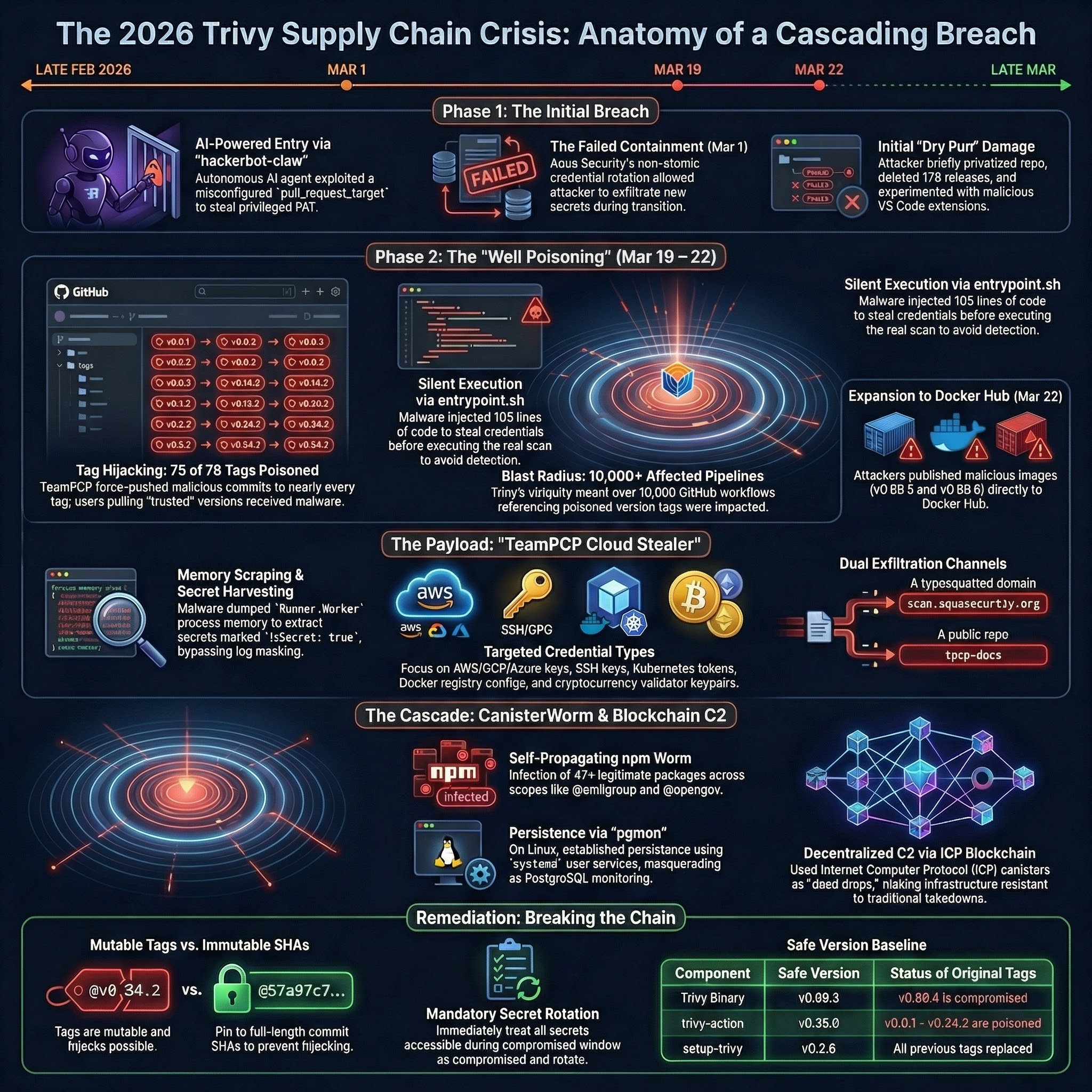
In March 2026, attackers turned Aqua Security’s Trivy ecosystem into a credential-harvesting distribution channel. This was not one bug, one poisoned package, or one bad release. It was a chained failure across GitHub Actions trust, secret rotation, mutable tags, runner memory, registry publishing, and npm’s default willingness to execute third-party code. On February 27 and February 28, 2026, the Trivy story started the way a lot of modern software compromises start: not with a zero-day in the scanner, but with automation glued together too loosely around trust. An autonomous agent dubbed hackerbot-claw found a dangerous pull_request_target pattern in Aqua Security’s Trivy repository, exploited it, and stole a privileged aqua-bot token. That first breach was bad enough on its own. The real disaster came after the first incident was supposedly contained. ...